NUGGETS OF WISDOM

desolate-millennium

DON’T BET ON GOD, BELIEVE IN GOD –

After David’s friend Doeg the Edomite betrayed him, David narrowly escaped King Saul’s clutches. But the poor people in the village of Nob were not so lucky. Doeg had decided that sticking with King Saul was a better choice than sticking with wannabe king, David, so he willingly participated in a horrendous massacre of the villagers in Nob, something that still seems to be prevalent in that part of the world today. David was shocked, but it did not deter him from following God’s plan and will for his life. He knew who would come out the victor in the end.

“O One True God, I know I can trust You to prove my innocence and show everyone I meant no harm. Hear my prayer O One True God; listen closely to what I’m about to tell You. A bunch of cutthroats I’ve never met are suddenly trying to get rid of me; they are the kind of people who don’t give a second thought to what they are doing to people. I want them to know that the One True God is on my side; He’s the one who backs me up in situations like this. That’s why I believe this will backfire on them as soon as what they are up to is out in the open. Then I will praise and worship You for who You are and for Your goodness, O LORD Eternal. Yes, I’ll tell how You got me through this ordeal and allowed me to be a victor and not a victim.” Psalm 54:1-7

Reflection: Here’s how the story goes: A hurricane bore down on a coastal area with threatening power and speed. Police cars went around warning everyone to evacuate immediately. As they passed a church parsonage, the preacher was standing in front and calmly told the officers that he had full faith and trust in God to help him survive. The winds and tidal wave hit with unbelievable force, and as the water rose rapidly the Coast Guard passed by the parsonage in a boat and offered to give the pastor who was looking out the window of the second floor a ride to safety. But the Reverend waved them off with a smile as he told them emphatically that he trusted in God completely to carry him through. It wasn’t long before the minister was standing on his roof to get away from the rising flood. A Navy helicopter overhead saw him and lowered someone to pick him up. But the preacher remained adamant that he still believed that God would protect him. After being swept away with the parsonage by the roaring flood, the pastor, who couldn’t swim, drowned before he could be rescued. When he arrived in heaven the minister approached St. Peter and demanded to see God immediately. As he was ushered into the throne room, he begged God to explain why He let him suffer such humiliation when all along he believed that He would save him. Gently God replied, “I sent a police car, a rescue boat, and finally a helicopter, and you kept turning down My efforts to take you to safety. What else did you expect Me to do?” While David’s experience was quite different, the same principle applies. When we ask God for help in a crisis, we cannot expect Him to do things our way because we believe it’s the way it should be done. We often give Him our definition of a miracle and we want Him to perform it the way we outlined it. Believe it or not, some believers have such a superior attitude, that they expect God to do things in their way so they can be seen as having super-faith. But David had no such interest. He simply went to God in prayer and asked for directions. He wanted God to get all the glory for his deliverance, even if God’s way of helping him went against his concepts of deliverance.


Posted in Uncategorized | Leave a comment

POINTS TO PONDER

nature-11-01

No doubt we’ve all heard about whether someone or something is the subject or object of an act or conversation. Knowing how to distinguish will help us figure out when to use “who” or “whom,” or “lay” or “lie.” There’s an easy way to do that. The subject is the person or thing that is doing or saying something. The object is that to which something is being done or said about. Here’s one way to remember it: When you say “I love you,” I is the subject who is providing that love, and You is the object toward whom that love is being directed. So we can see Who is expressing love, and to Whom that love is being expressed. Unfortunately for some people, as the Who they get so caught up when things don’t go the way they want them to, or things don’t turn out the way they planned, they want to blame it on the Whom. However, in many cases, they don’t realize that the subject has become the object of their own mistake, be it foolishness, carelessness or blindness to reality. So the next time something doesn’t work out, instead of looking for a culprit outside yourself, first look within yourself and you may find it there. Not only is that helpful in solving the error, but it’s a lot easier dealing with yourself than someone who is not under you control. – Dr. Robert R Seyda

Posted in Uncategorized | Leave a comment

SERENDIPITY FOR SATURDAY

Waterfall

THE PART YOU DIDN’T KNOW – We all know the story of Shadrach, Mesach and Abed-Nego in Daniel. But did you know that in the Babylonian Talmud, which is the Rabbi’s commentary on the Bible taken from oral traditions, they give us a somewhat different version. Not only about the three Hebrew Children, but about Abraham having to go through the same ordeal. Here it is in its original form:

Rabbi Na’ham bar Itz’hak said: The small Hallel is recited for another reason, namely, because it contains the transposition of the souls of the righteous from Gehenna to Heaven as it is written [Psalms 116:4]: “I beseech thee, O Lord! release my soul” (from Gehenna). Hez’kyah said: There is still another reason why the small Hallel should be recited, namely, because it is mentioned that Hananiah, Mishael, and Azariah were thrown into the fiery furnace and came out alive: because the passage, “Not for our sake, O Lord,” was said by Hananiah; “But unto thy name give glory,” was said by Mishael, and “For the sake of thy kindness, for the sake of thy truth,” was said by Azariah; and the next passage, “Wherefore should the nations say, Where now is their God?” all three said together. This happened when they were thrown into the fiery furnace, and when they came out Hananiah said the passage [Psalms 117], “Praise the Lord, all ye nations!”; Mishael said: “Praise him, all ye people!” Azariah said, “For mighty is his kindness over us,” and “And the truth of the Lord endureth forever, Hallelujah!” was said by all three in unison. According to another version, this last sentence, “The truth of the Lord endureth forever,” was said by the angel Gabriel, because it was said that when Nimrod the wicked threw Abraham our father into the fiery furnace, the angel Gabriel said to the Lord: “Permit me to go and make the furnace cold, that it may do no harm to Abraham,” and the Holy One, blessed be He, replied: “Abraham is now the only one who has forsaken idolatry and believes in God, and I am the only One in the world, hence it would be but fair that the only One should rescue the other. And as the Holy One, blessed be He, would not deprive any one creature of the reward due, He said to Gabriel: “Thou shalt have an opportunity to rescue three of his children from a fiery furnace, while I Myself shall rescue him [Abraham].” (Whereupon Gabriel is supposed to have said: “The truth of the Lord endureth forever.”) Rabbi Simeon of Shiloni preached: When Nebuchadnezzar the wicked threw Hananiah, Mishael, and Azariah into the fiery furnace, the angel Jurqami, master of the waters, came before the Lord and said: “Permit me to go and cool the furnace, so that I might rescue the righteous from death.” Said Gabriel to him: “This would not prove the power of the Lord, for it is well known that water can extinguish fire, and thou art the master of waters; hence it would be but commonplace if through thy means the furnace were cooled. Rather should I, who am the master of fire, be permitted to go, and I shall remove the fire on the inside and make it so much more fierce on the outside, which will be a miracle within a miracle; for a master of fire will make the fire cool in one place and so much hotter in another.” Whereupon the Lord said: “Go thou, Gabriel, and do so,” and Gabriel said: “The truth of the Lord endureth forever.”

This shows you what creative minds can do to an original story! Unfortunately, the same has been done with the Gospel at times.

Posted in Uncategorized | Leave a comment

NUGGETS OF WISDOM

nature-52-01

WHAT’S YOUR WEAKEST POINT –

The compilers of the Psalter wanted to show that David did trust God to be on his side when people with biased hearts and treachery in their minds tried to get him to forsake God and thus bring an end to his mission to be the king God anointed him to be. So they included this Psalm reflecting David’s feeling of disbelief that a close friend would betray him for personal gain, but also show how David still maintained his faith in the God he knew would never deceive him and he would be able to trust Him through good times and bad.

“Why are you so proud about what you so shamelessly did to me? It won’t stop my Sovereign King from being my best friend. You betrayed me with your pretentious words; they were like a steel chisel aimed at carving your insults on my heart. You lied rather than tell the truth because you prefer doing what’s wrong instead of doing what’s right. You spread malicious gossip meant to embarrass me because you’re deceitful and two-faced. But our Sovereign King will see to it that you get what’s coming to you; you’ll end up being half the man you were and lose your standing in society. When believers see this they will be awestruck; they will then be unafraid to tell you what they think of you because you decided to put your faith in your ranking and your ability to fool others, rather than putting your faith in the One True God to get you through. But look at me now; I’m blossoming like a tree in the front yard of our One True God; for I trusted His unwavering love to get me through. That’s why, O One True God, I’ll never ever stop thanking You for what You did for me; oh yes, I will openly testify of my faith in You for who You are so that others who’ve put their hope in You will be encouraged.” Psalm 52:1-9

Reflection: Years ago I visited an exhibition of relics from the 900-foot opulent cruise ship Titanic that sank in 1912 on its maiden voyage from England to New York. Fifteen hundred people died in the freezing waters of the North Atlantic Ocean, resulting in the worst maritime disaster of that era. In school I heard that it struck an iceberg which caused it to take on water faster than it could pump it out, followed by a loud explosion that tore it in half. Recently an international team of divers and scientists used deep-sea submarines to probe the wreckage buried in mud some two-and-a-half miles under water. To their amazement they discovered that the original damage was not as large as once thought. Instead of finding huge, long gashes in the side of the hull, they discovered that when the ship hit the iceberg, some poorly-made rivets with a high content of slag sheared off in the collision. This caused the deficiently made steel hull to buckle, thereby flooding the so-called watertight compartments that made the ship list forward and then sink. In other words, a small almost invisible failure resulted in an enormous ship to go down, taking its passengers and the company’s reputation with it. Someone who had once been David’s friend decided to leave and sail on the ship that Saul was captain of. It was a tragic mistake. The king who once stood head and shoulders above all other men died in defeat by falling on his own sword. This former friend of David’s named Doeg, who became Saul’s chief shepherd, gets no further mention in Israel’s history. Their ruin did not result from big things that overwhelmed them, but from little things they neglected that ended up tearing them apart at their weakest point. This should be a lesson to all believers that during times of storm and turmoil keep an eye on the little weakness in your life; put your trust in God’s ability to strengthen you in those areas so you come out victorious on the other side.

Posted in Uncategorized | Leave a comment

NUGGETS OF WISDOM

1525r-141366

WHY HIDE ANYTHING FROM GOD –

In compiling psalms that deal with trying to fool God or being foolish enough to think you can hide things from God, the compilers chose to include David’s confession following his adultery with Bathsheba, and the pain of Nathan’s exposure of his foolishness. David wrote this psalm in an effort to reconcile with his Heavenly King, and was anxious to regain his position as a man after God’s own heart. David learned a valuable lesson in dealing with his sinful nature: Admit that you did wrong; Confess that wrong in its entirety to God; then, Pledge with God’s help never to repeat it. Only a full and complete confession will result in full and complete forgiveness.

“O One True God, please find a way to forgive me and love me once again; let Your compassion be sufficient to remove this rebellious act from my record; yes, wash the dirt from my soiled soul. I know I did wrong; I’ve had constant nightmares over it. You’re the One I failed; You saw me commit this awful deed; who could blame You for finding me guilty and giving me the punishment I deserve? I’ve struggled with sin all my life; I was born with these evil tendencies already in my heart. That’s why You cause us to feel conviction; to make us aware of these secret urges. So cleanse me ‘til I feel pure; yes, wash me ‘til I know every spot is gone. This will allow me to experience joy and contentment again after You turn my pain and grief into rejoicing. Please keep me from becoming obsessed with my sinfulness, by erasing it completely from my mind. Then design a pure heart for me, O One True God, and fill it with a spirit of dedication. Whatever You do, don’t dismiss me from Your presence or withdraw Your Holy Spirit from me. But let me once more rejoice in Your saving power; so with a grateful spirit I can keep going. Believe me, I will certainly let others dealing with the same temptations know what You’ve done, so they will turn back to You. So I ask You now, O One True God, pardon me so I won’t die in my sins; I want so much to sing with all my heart about the One True God and His marvelous grace.” Psalm 51:1-14

Reflection: A woman angrily confronted her husband about his affair with another woman in town. With trembling shoulders he bowed his head, and as tears streamed over his cheeks he asked her forgiveness. In response she gave him a list of things she wanted him to do before she would forgive him. It took quite a while until he finished the last item on the list, which he then gave to his wife for approval. After looking it over, and with a smirk on her face, she tore up the completed list and with little sincerity said, “Okay, I guess I have to forgive you.” That’s when her husband turned, walked to the front door and opened it. As he prepared to exit he looked back at his wife and said with a calm voice, “You don’t need to give me your forgiveness, I’ve earned it!” then walked out and never came back. They ended up getting a divorce; he married the other woman and went on with his life, while she continued to sit at home each evening in misery, stewing in frustration and anger because she didn’t feel she made him pay a big enough price. David knew there was no sacrifice to cover his sin; there was nothing he could do to earn it. So he threw himself completely on God’s mercy and grace, falling at God’s feet and pleading for forgiveness. He didn’t do this to garner pity, or see what bargain he could make with God; he did it but because of whom God is and what God can do. God did not give him a list of things to accomplish in order to earn forgiveness, because He knew that was impossible. What a great lesson for anyone trying to pay for or earn forgiveness from God, when all along His grace and mercy offers it freely to those who are sincere.

Posted in Uncategorized | Leave a comment

NUGGETS OF WISDOM

k6300215

WHERE DO YOU STAND WITH GOD –

Asaph, a descendant of Levi, was the music minister in the tabernacle. David often gave him psalms to be set to music. But it was more than just creating rhythm, although Asaph was good on the cymbals. He wanted people to better understand the God they served, and how they should appreciate His love and forgiveness. He also wanted them to know that worshiping God was not sufficient, if we did not combine it with following His word and His will. After all God had given His people, He deserved all they had in return.

“Come to Me from wherever you are, said the KING of kings, the LORD Eternal. Then He appeared in all His splendor and glory! That’s how our One True God will appear with the fire of Shekinah glory swirling around Him like a whirlwind, and not hesitate to speak His mind. All heaven and earth will be invited to witness the judgment of His people. So He spoke and said, ‘Bring everyone who made a covenant with Me by way of the sacrifice that was given!’ We know that all heaven has seen how He deals so fairly with people, because the judge is the One True God Himself. ‘Listen to what I’m about to reveal,’ He will say, ‘As I, the One True God, your One True God, read any charges made against you believers. I won’t fault you based on your giving and offerings made daily; I won’t confiscate your assets or possessions, your property or valuables; I already own everything. If I were hungry, I don’t need a hand-out from you because everything is already Mine. So continue with your offerings and pay your tithes to your One True God, your God Most High. And call on Me when troubles come your way and I will stand by your side so you can honor Me with praise’.” Psalm 50:1-15

Reflection: Back in the days when the American west was being populated by pioneers, they traveled in covered wagons drawn by oxen to settle on unclaimed lands. One such group in a wagon train noticed a huge cloud of smoke stretching for miles across the horizon. It didn’t take them long to realize that a prairie fire was being blown directly at them by fierce winds. It was too late to retreat to the river they crossed just the day before, because their wagons moved very slowly. Suddenly the leader got an idea. He placed everyone in a long line parallel to the wall of fire coming straight toward them, and then told everyone to set the grass behind them on fire. As the fire burned away in back of them, they moved with it so they soon stood on ground already burned. As the huge prairie fire approached them, one little girl panicked and cried out in terror, “We’ll all burn to death!” Calmly the leader responded, “No, my child, the flames cannot reach us here for we are standing where the fire has already been.” What a somber but clear picture this gives those who now stand on holy ground already burned by God’s judgment on sin. As pilgrims we do not attend worship, join in ministry, read our Bibles, participate in prayer, or say grace at meals just because we believe we “owe” it to God. No, we’re not trying to pay Him back for all the good things He’s done for us, that’s impossible and a waste of time. We do all these things as our way of saying, “Thank You LORD for Your love, kindness, forgiveness, grace, and mercy; thank You for making it possible for us to survive a fiery ending, and one day stand before You forgiven and redeemed!”

Posted in Uncategorized | Leave a comment

NUGGETS OF WISDOM

zrmanja-river-croatia-46598408

WHO ARE FOOLING?

The compilers of the Psalter wanted to continue the theme of putting faith in God to deliver, so they chose this psalm written by one of Korah’s sons. It seems they had the same situation back then that we experience today. That is: some believe that the rich and famous, the powerful and influential, are guaranteed a better standing in the world to come because of their standing down here. They need not attend church, read their Bibles, or be known for their prayer life. The theory is that God will reward them for their good works, not their faith. The Psalmist knew better and wanted everyone to know the truth.

“Listen everyone, whether you are an ordinary person or a celebrity, whether you are rich or poor; I’m going to give you some wise advice and make it very clear. I will let this parable speak for me, which I’m putting into song and music so it will be easier to remember: ‘Don’t lose faith when things begin to fall apart because those all around you have fallen into immoral living; especially those people who think that getting rich will solve all their problem; those who foolishly seek lavish lifestyles. Let me tell you something, no amount of money can buy eternal life or pay the price for redemption that our One True God requires. The amount needed to purchase redemption is beyond anyone’s means, so stop trying.’ Does anyone think they can buy eternal life and somehow bypass the grave? No matter how intelligent or successful a person may be, they will end up in the grave just like those who are ignorant failures; leaving everything they have behind for others to spend. Even though their estates are named after them, their grave will become their future home, as it will for all those who follow in their footsteps. Every person should know that they cannot take their wealth with them; death will treat them like any other creature. Only those who are self-absorbed think otherwise, along with anyone else who believes such nonsense.” Psalm 49:1-13

Reflection: Recently a poll was conducted at Rockefeller Center in New York City, and only 4% of those polled knew anything about the Rockefeller family, or how they accumulated their wealth. Most of their riches came from investments in Standard Oil, which later became known as Exxon and Mobil. J. D. Rockefeller also helped found Chase Manhattan Bank. By 1911 his estimated worth was $900 million, which would be $9 billion in today’s money. When he died in 1937 he had given away over $500 million. He helped found the University of Chicago; the Rockefeller Institute for Medical Research – now Rockefeller University. He also gave $5 million to help found the Great Smoky Mountains National Park; helped in the restoration of Colonial Williamsburg, Virginia, and built the Rockefeller Center in 1931. Yet, for all his wealth, influence and generous giving, Rockefeller will face the same judgment seat of God as all the beggars who died on the streets of New York during the great depression. He will have no advantage over them based on his high standing as a friend of presidents and kings. That’s why we should never allow ourselves to be compared to another person’s standing in this world, but let the great Judge pronounce His decision based on our standing in the world to come.

Posted in Uncategorized | Leave a comment

NUGGETS OF WISDOM

templebig

GOD APPRECIATES YOU, APPRECIATE HIM –

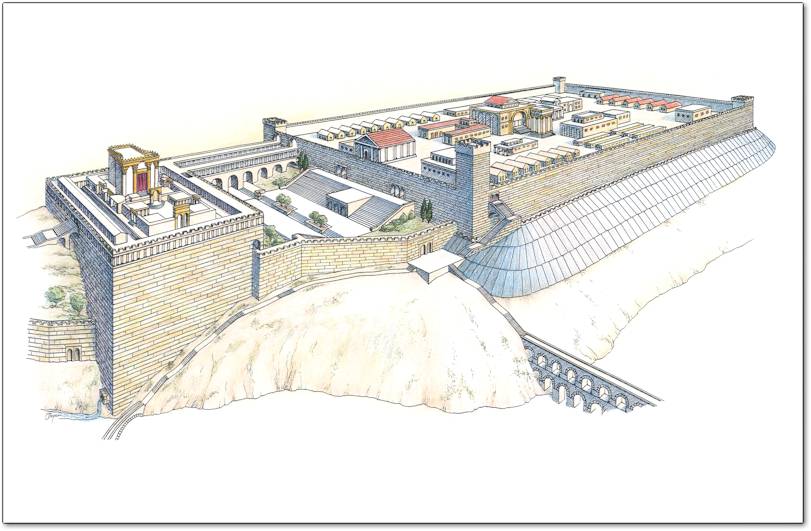
God’s miraculous victory over the enemy to save Hezekiah, not only preserved His people from falling prey to a heathen monarch, but also the City of David. Sitting some 2,500 feet above sea level on the summit of Mt. Zion; with its whitewashed buildings against the backdrop of the brown-earthed, finger-like hills, pilgrims spotted the city like an opal on a ring finger. Then at night, with all its lanterns burning it sparkled like a diamond in the sky; like a star on a hill; calling everyone to come to its streets filled with laughter and song. But for the Psalmist, the greatest attraction of that marvelous city was the fact that God had made it His home.

“In the City of our One True God, our awesome LORD Eternal is celebrated with great enthusiasm. High up on His Holy Mountain, in a beautiful location on the northern summit where the whole world can see Him, is the dwelling place of our great King. And because it is built so strong, our One True God has made Himself known as a safe haven of rest. You remember, how several foreign kings joined forces and came against this holy city en mass. They took one look and were literally stunned, so they turned and fled faster than they came. And things we once only heard about from others, we now are able to witness where our LORD Eternal, who is worshiped by millions dwells, yes, in the place our One True God calls home; and may our One True God always keep it that way. For inside, Your sanctuary, O One True God, we meditate on Your unshakable love. And because we admire You so, O One True God, that admiration of who You are and what You’ve done extends around the world; because Your mighty hand ensures justice for all. So let the congregations rejoice! Yes, let believers be glad He has given us something to be glad about. This is our Eternal One True God, and He will guide us to everlasting life.” Psalm 48:1-5, 8-11, 14

Reflection: William James, one of the founders of modern psychology theories, received an azalea plant one day, as a gift from his class of young ladies at Radcliffe College, in Cambridge, Massachusetts. James often suffered from long bouts of depression, as well as various physical ailments. In response he wrote his class a letter, expressing appreciation for their kindness. In his letter he acknowledge somewhat ashamedly: “I now perceive one immense omission in my Psychology – the deepest principle of Human Nature is the craving of praise, and I left it out altogether in my book.”

One does not need to be a practicing psychologist to know the value of being appreciated, and the blessing others receive when we express our gratitude to them. It’s like a dividend being paid back for their caring investment of love in our lives. How much more then must we show our daily appreciation to the One True God. Not only for all the things He has done for us, but for all the things He did not allow to disrupt, and possibly ruin, our lives. While He is able to read our hearts and minds, those around us cannot. That’s why the psalmist was so vocal about his appreciation for God who gave him victory in a battle he didn’t even need to fight. So instead of waiting to rejoice in triumph after the battle is over, let us begin the shout for joy before it even begins!

Posted in Uncategorized | Leave a comment

POINTS TO PONDER

th

Even though I had seen this object, I never really knew what it was until I enrolled in Logic at the University. Then the professor explained that it was designed to show how ideas can interact with each other in various ways, and was called the Venn Diagram. This led me to put BODY in one circle, MIND in another circle, and SPIRIT in the last circle. Then I searched the Scriptures to see what the body shared with the spirit in their interaction; what the spirit shared with the mind and what the body shared with the mind and vice versa. But in the center I wanted to look for what all three meant to each other. I also did this with the Trinity. It was a real learning experience. For me the MIND involves the ego, emotions, and will – our psychological perspective of self-consciousness as it relates to others. The SPIRIT involves super-ego, intuition, conscience and fellowship – our spiritual perspective of God-consciousness as it relates to the divine. And the BODY involves the id, senses, needs, and wants – our physiological perspective of world-consciousness as it relates to the environment. So how do they all relate to each other when an incident happens that affects just one. In other words, how does the mind and spirit cope with a bodily issue, and how do they interact with each other? To often, especially during times of trial and temptation, we concentrate only on one aspect of our being, instead of realizing how anything we do or say affects the whole organism. Just like colors in the same diagram, when combined together they mutate into a totally different shade of the two colors involved. It also depends on how much of each color is involved. So the next time, as a born again believer, you deal with an issue of importance or something more mundane, just ask yourself how your being and your decision or lack of decision may impact the other two parts of your being, and then all three combined. It may help you make up your mind in a more conscientious way. – Dr. Robert R Seyda

Posted in Uncategorized | Leave a comment

SERENDIPITY FOR SATURDAY

Bridge

HOW ONE PICTURE PAINTED A THOUSAND WORDS – A hardworking business man finally retired and wanted take up full-time his life-long dream of being an artist. But the years of heavy labor and arthritis had so crippled his hands and fingers he was unable to pursue his dream. Therefore, he decided to have a contest for up and coming artists and guarantee the winner his full financial support to paint the masterpieces he could now only dream of. So he rented a large auditorium and sent out invitations to all aspiring artists in the country to enter the competition. He announced a common theme for all artistes to try and interpret in their painting and that was, “Peace.” On the day of judging, along with several well-known art curators, he began walking down between the many rows of canvasses to see who portrayed “Peace” the best. At one point he stopped at the easel of a young lady to study her work. It depicted a scene high up in the Alps with untouched snow filling the valley, and a small cloud seemingly snared by the apex of the highest peak; as the sun shining through the pure air glistened off the undisturbed mountain landscape. With a smile on his face he asked the young lady, “What do you call this painting?” “Peace on the Mountain,” she replied. He walked on and after a while came to a portrait done by young man. As his eyes examined the canvass he saw a beautiful vale with knee-high grass, blossoming flowers, and trees full of fruit; several deer were drinking from a slow moving brook flowing through the lush meadow. In the background sat a beautiful vine-covered cottage with a wisp of smoke rising from the chimney. “My, my, what do you call this piece?” he asked the young man. “I call it, ‘Peace in the Valley’,” replied the young fellow with a gleam in his eyes. As he finally approached the end of the last row in the exhibition, he spotted a watercolor created by an older artist that immediately caught his startled eye. He walked over to get a closer look at the canvass just to make sure of what he was seeing. There was a portrait of a wild rushing river white with foam, roaring through a mountain gorge carrying everything in its way. The sky was pitch dark and flashes of lightening emitted from the clouds with brilliant bursts, as rain pelted down with horrendous fury pounding everything it hit with ferocity. The philanthropist was taken aback, and looking at the artist exclaimed with a frown, “The theme was ‘Peace,’ I don’t see any peace here!” The artist asked the gentleman to get nearer so he could see a scene portrayed up on the side of a sheer cliff. There he saw a limb sticking out underneath an overhang holding a nest on which a small bird sat chirping away as she calmly covered her eggs. “What in the world do you call this” the philanthropist exclaimed! The artist smiled and said softly, “Sir, I call it ‘Peace in the Time of Storm’.” This is the kind of peace that only Jesus can give.

Posted in Uncategorized | Leave a comment