I AM NOT ASHAMED OF THE GOSPEL

search

NEW TESTAMENT CONTEXTUAL COMMENTARY

Dr. Robert R. Seyda

EPISTLE TO THE ROMANS

CHAPTER ONE (Part XXV)

Paul was very much aware that this degenerate form of immoral activity was still prevalent in his day. He had to warn the Corinthians: “Surely you know that people who do wrong will not get to enjoy God’s kingdom. Don’t be fooled. These are the people who will not get to enjoy His kingdom…men who let other men use them for sex or who have sex with other men… In the past some of you were like that. But you were washed clean, you were made holy, and you were made right with God in the name of the Lord Jesus Christ and by the Spirit of our God.”1 Paul also warned young Timothy: “We also know that the law is not made for those who do what is right. It is made for those who are against the law and refuse to follow it. The law is for sinners who are against God and all that is pleasing to Him… It is for those who commit sexual sins, homosexuals, those who sell slaves, those who tell lies, those who don’t tell the truth under oath, and those who are against the true teaching of God.”2

It is interesting that Paul puts this unnatural desire to be intimate with the same sex in the category of other unnatural instincts. So if one is allowed, what will keep the others from also becoming a natural way of living and conducting oneself? So it goes without saying, that such unnatural tendencies are to be resisted. And only when a person gathers the courage to resist doing what’s wrong and an abomination to God, will He then give them strength to gain victory. So the apostle Jude tells the community of believers: “Remember Sodom, Gomorrah, and the surrounding cities, following a pattern like theirs, committing sexual sins and perversions, lie exposed as a warning of the everlasting fire awaiting those who must undergo punishment.”3

The stoic philosopher Seneca was bemoaning the depraved condition of those in power who wallowed in immorality because of their lust and wealth. In one of his epistles he mentioned this: “Believe it or not, men live contrary to Nature who exchange the fashion of their attire with women.”4 Today this is more commonly referred to as cross-dressing or transgender attire. Also, Clement of Alexandria made this observation: “The fate of the Sodomites was judgment to those who had done wrong, instruction to those who hear. The Sodomites having, through much luxury, fallen into uncleanness, practicing adultery shamelessly, and burning with insane love for boys.5

But this abuse of boys by men was also prevalent among the Greeks. In one of their documents we read: “Phaedo of Elis belonged to that famous Socratic band and was on terms of close intimacy with Socrates and Plato. His name was mentioned by Plato in that inspired dialogue of his on the immortality of the soul. This Phaedo, though a slave, was of noble person and intellect, and according to some writers, in his boyhood was driven to prostitution by his master, who was a panderer.6 For those who bemoan these same conditions in the world today, it’s not new. The body of Christ has endured it before and will persevere again. The only admonition we need to remember is not to give in, for our Lord said: “The one who stands firm to the end will be saved.7

One early church scholar who was a contemporary of the great Chrysostom, gives us his impression of what Paul is referring to here. He writes: “Paul did not say this lightly, but because he had heard that there was a homosexual community at Rome.8 And Ambrosiaster speaks out by saying: “It is clear that, because they changed the truth of God into a lie, they changed the natural use (of sexuality) into that use by which they were dishonored and were condemned to the second death. For since Satan cannot make another law, having no power to do so, it must be said that they changed [existing law] to another order and by doing things which were not allowed, fell into sin. Paul says that the due penalty comes from contempt of God, and that it is wickedness and obscenity. For this is the prime cause of sin. What is worse, what is more harmful than that sin which deceives even the devil and binds man to death?9

Reformist John Calvin has this to say about mankind’s condition after rejecting the truth and turning a blind eye to God’s creative glory: “They indeed deserved to be blinded, so as to forget themselves, and not to see anything appropriate for them, who, through their own malignity, closed their eyes against the light offered them by God, that they might not behold His glory: in short, they who were not ashamed to extinguish, as much of the glory of God as they could, which alone gives us light, deserved to become blind at noonday.10

Albert Barnes gives evidence as to why the apostle Paul focused in on these homosexual activities among the pagans of Paul’s day. He writes: “It doubtlessly pervaded all classes, and we have distinct specifications of its existence in a great number of cases. Even Virgil speaks of the attachment of Corydon to Alexis, without seeming to feel the necessity of a blush for it. Maximus Tyrius says that in the time of Socrates, this vice was common among the Greeks; and is at pains to vindicate Socrates from it as almost a solitary exception.11 Cicero says, that ‘Dicearchus had accused Plato of it, and probably not unjustly.’12 He also says that the practice was common among the Greeks, and that their poets and great men, and even their learned men and philosophers, not only practiced, but gloried in it.13 And he adds, that it was the custom, not of particular cities only, but of Greece in general.14 Xenophon says, that ‘the unnatural love of boys is so common, that in many places it is allowed by public laws.1516

John Stott also weighs in on this subject: “Verses 26–27 are a crucial text in the contemporary debate about homosexuality. The traditional interpretation, that they describe and condemn all homosexual behavior, is being challenged by the gay lobby. Three arguments are advanced. First, it is claimed that the passage is irrelevant, on the ground that its purpose is neither to teach sexual ethics, nor to expose vice, but rather to portray the outworking of God’s wrath. This is true. But if a certain sexual conduct is to be seen as the consequence of God’s wrath, it must be displeasing to Him. Secondly, ‘the likelihood is that Paul is thinking only about pederasty’ since ‘there was no other form of male homosexuality in the Greco-Roman world,’ and that he is opposing it because of the humiliation and exploitation experienced by the youths involved.17

Stott goes on to say: “There is the question of what Paul meant by ‘nature’? Some homosexual people are urging that their relationships cannot be described as ‘unnatural’, since they are perfectly natural to them. John Boswell has written, for example, that ‘the persons Paul condemns are manifestly not homosexual: what he derogates are homosexual acts committed by apparently heterosexual people’. Hence Paul’s statement that they ‘abandoned’ natural relations, and ‘exchanged’ them for unnatural. Richard Hays has written a thorough exegetical rebuttal of this interpretation, however. He provides ample contemporary evidence that the opposition of ‘natural’ and ‘unnatural’ was ‘very frequently used … as a way of distinguishing between heterosexual and homosexual behavior.’ Besides, differentiating between sexual orientation and sexual practice is a modern concept; ‘to suggest that Paul intends to condemn homosexual acts only when they are committed by persons who are constitutionally heterosexual is to introduce a distinction entirely foreign to Paul’s thought-world,’ in fact a complete anachronism.”18

Here’s what Stott says in his conclusion: “So then, we have no liberty to interpret the noun ‘nature’ as meaning ‘my’ nature, or the adjective ‘natural’ as meaning ‘what seems natural to me.’ On the contrary, physis (‘ natural’) means God’s created order. To act ‘against nature’ means to violate the order which God has established, whereas to act ‘according to nature’ means to behave ‘in accordance with the intention of the Creator.’ Moreover, the intention of the Creator means His original intention. What this was Genesis tells us and Jesus confirmed: ‘At the beginning the Creator “made them male and female,” and said, “For this reason a man will leave his father and mother and be united to his wife, and the two will become one flesh.” So they are no longer two, but one.’ Then Jesus added His personal endorsement and deduction: ‘Therefore what God has joined together, let man not separate.’ In other words, God created humankind male and female; God instituted marriage as a heterosexual union; and what God has thus united, we have no liberty to separate. This threefold action of God established that the only context which He intends for the ‘one flesh’ experience is heterosexual monogamy, and that a homosexual partnership (however loving and committed it may claim to be) is ‘against nature’ and can never be regarded as a legitimate alternative to marriage.”19

Douglas Moo also adds his insights on this subject: “Paul shows that the same ‘sinful passions’ that led women to engage in unnatural homosexual acts are also operative among men, with similar effect. Homosexuality among ‘males,’ like that among ‘females,’ is characterized as a departure from nature. As in the previous verse, ‘nature’ denotes the natural order, but as reflective of God’s purposes. Paul uses strong language to characterize male homosexuality: ‘they burned in their desire for one another, men with men doing that which is shameful and receiving in themselves the just penalty that was necessary for their error.’ In calling the homosexual activity that brings about this penalty an ‘error,’ Paul does not diminish the seriousness of the offense, for this word often denotes sins of unbelievers in the NT. In claiming that this penalty for homosexual practice is received ‘in themselves,’ Paul may suggest that the sexual perversion itself is the punishment. On the other hand, this could be a vivid way of saying that those who engage in such activities will suffer eternal punishment; they will receive ‘in their own persons’ God’s penalty for violation of His will. This punishment, Paul says, was ‘necessary,’ by which he probably means that God could not allow His created order to be so violated without there being a just punishment.20

1 1 Corinthians 6:9-11

2 1 Timothy 1:9-10

3 Jude 1:

4 Lucius Annaeus Seneca: Moral Epistles, Translated by Richard M. Gummere, The Loeb Classical Library. Cambridge, MA, Harvard University Press, 1917-1925, Vol. 3, Number 122

5 Clement of Alexandria: The Paedagogus, Bk. 3, Ch. 8

6 Noctes Atticae by A. Cornelius Gellius, The Loeb Classical Library edition, 1927, Vol. I, Bk. II, Ch. 18:1-3

7 Matthew 24:13

8 Severian: Pauline Commentary from Greek church, loc. cit.

9 Ambrosiaster: op. cit., loc. cit.

10 John Calvin: On Romans, loc. cit.

11 The Dissertations of Maximus Tyrius: Translated from the Greek by Thomas Taylor, Published by C. Whittingham, London, 1804, Dissertation 10, Vol. I, p. 102, Tyrius mentions that a Thracian boy named Smerdies, who was a royal lad, was captured by the Greeks and given to the tyrant Polycrates as a gift, and Polycrates was very pleased. But this lad was also courted by the Teïan poet Anacreon. So Polycrates gave Smerdies gold and silver as gifts while Anacreon sang odes and praises to him.

12 Cicero’s Tusculan Disputations: Translated by Andrew P. Peabody, Boston, Little, Brown, and Co., 1886, On the Passions, Bk.4, Q. 34, p.243

13 Ibid., Bk. 4, Q. 33, p. 242

14 Ibid. Bk. 5, Q. 20, pp. 285-286

15 Xenophon: Symposium, 8:11

16 Albert Barnes: op. cit., loc. cit.

17 John Stott: On Romans, op. cit., loc. cit.

18 Ibid.

19 Ibid.

20 Douglas Moo: On Romans, op. cit., loc. cit., pp. 116-117
Posted in Uncategorized | Leave a comment

I AM NOT ASHAMED OF THE GOSPEL

search

NEW TESTAMENT CONTEXTUAL COMMENTARY

Dr. Robert R. Seyda

EPISTLE TO THE ROMANS

CHAPTER ONE (Part XXIV)

German scholar John Bengel, considered the father of modern Biblical scholarship, in his work called, “Gnomen1 of the New Testament,” deconstructs this verse as follows: “The Truth – Which commands us to worship God as God. Into a lie – [That is, exchanged for a lie] the price of mythology. Worshiped – Internally. Served – Externally.2 Today we might call this “stolen identity.” Using all the things belonging to God for our enjoyment and enrich the prince of this world.

H. A. Ironside also gives what he sees as evidence of what Paul is saying here: “Observe the downward steps on the toboggan-slide of idolatry – God thought of first as an idealized man, then likened to the birds that soar into the heavens, next to the beasts that prowl over the earth, and finally to serpents and other detestable creeping things, whether reptilian or insectivorous. Even the Egyptian worshiped the serpent and the scarabaeus,3 and yet back of all Egyptian mythology is hidden the original revelation of one true and living God! What degradation does this imply on the part of one of the most enlightened nations of antiquity!4

Even in his day, preacher Charles Spurgeon lamented: “There are many preachers who have ‘changed the truth of God into a lie;’ and by their exaltation of man, they have ‘worshiped and served the creature more than the Creator, who is blessed for ever.’ God save all of us from such idolatry as that! Amen.”5 As I have indicated in the translation of the text above, the truth was used to promote a lie, because it is impossible to transform the truth into a falsehood. It is a matter of using it for wrong purposes with misleading intent.

Albert Barnes has an interesting note on the way Paul ends this verse with an “Amen.” “This is a Hebrew word denoting strong affirmation. So let it be. It implies here the solemn assent of the writer to what was just said; or his strong wish that what he had said might be – that the name of God might be esteemed and be blessed forever. The mention of the degrading idolatry of the pagans was strongly calculated to impress on his mind the superior excellency and glory of the one living God. It is mentioned respecting the Honorable Robert Boyle,6 that he never mentioned the name of God without a solemn pause, denoting his profound reverence. Such a practice would tend eminently to prevent an unholy familiarity and irreverence in regard to the sacred name of the Most High.7

Verses 26-27: Because people did those things, God allowed them to be overcome by their degrading and vile passions. Women exchange natural sexual relations for unnatural the same way men stopped having natural sex with women and began wanting each other all the time. Men did shameful things with other men, and in their bodies, they received the punishment for those wrongs.

There were times in the past when these verses were adopted as God’s commandments and were made part of man’s laws. While it did not stop such activities, it did place them in the category of being unnatural and therefore unlawful. However, today they are slowly being accepted as natural and as such cannot be considered illegal. This is being done under the covering of what is called, “civil rights.” Meaning, that society as a whole must now accept this as normal and give it their blessing. But this was not something the apostle Paul thought up on his own. He knew there were scriptures to back him up.8

John Calvin sees the sinister side of what happens when God allows mankind to exercise their own free will and chooses wrong over right, or bad over good. Calvin points out, that after Paul introduced God’s abandonment it as if it were an intervening clause, he now returns to what he had stated before on the judgment of God. Then he offers, as the first example, the dreadful crime of unnatural lust; and it, therefore, appears that they not only abandoned themselves to bestiality but became degraded beyond the beasts, since they reversed the whole order of nature. He then enumerates a long catalog of vices which had existed throughout the ages and then dominated everywhere without any restraint.9

Charles Hodge makes this point about how devastating a sign it was that Paul began with women: “This corruption of morals was condemned to no one class or gender. The description given by profane writers of the moral corruption of the pre-Christian ages is in all respects as revolting as that presented by the apostle. Paul first refers to the degradation of females among the heathen, because they are always the last to be affected in the decay of morals, and their corruption is, therefore, proof that all virtue is lost.10 In other words, males have been known to exhibit very vile and corrupt tendencies and language. But when women adopt the same practices, it is a clear omen that things have gone from bad to worse.

Ambrosiaster gives his view on this subject: “Paul tells us that these things came about, that a woman should lust after another woman because God was angry at the human race because of its idolatry. Those who interpret this differently do not understand the force of the argument. For what is it to change the use of nature for purposes which are contrary to nature, if not to take away the former and adopt the latter, so that the same part of the body should be used by each of the sexes in a way for which it was not intended? Therefore, if this is the part of the body which they think it is, how could they have changed the natural use of it as if they had not been given this use to them by nature?”11

The cases of lesbianism were not as acute as was male homosexuality. However, the Jews did have their commentary on such practices. For instance, in their Talmud, we read where many Rabbi’s did not permit their daughters to sleep together. This was because Rabbi Huna said: “Women that commit lewdness with one another are unfit for the priesthood.12 Also, Rabbi Solomon Jarchi, better known as Rashi, had this to say about Rebecca who, when the servant of Abraham first saw her, said: “She was very beautiful. She was a virgin; no man had ever had sexual relations with her.13 Rashi writes: “No man had been intimate with her in an unnatural way. Since the daughters of the Gentiles would preserve their virginity but were promiscuous in unnatural ways, Scripture attests that she was completely innocent.”14 Scholars take this promiscuity in unnatural ways as being lesbian intimacy.

It goes as far back as Noah. There has always been the question of why Noah would curse Canaan, the son of Ham when it was reported to him that while he was laying intoxicated in his tent, it was Ham who came in and saw his nakedness? Without going into extensive detail, there are three words used in the OT for “naked. ” One is “arowm”, which means nude, and was used in Genesis 2:25. Another is “eyrom”, which means nakedness, as seen in Genesis 3:7. The third is “erwah”, which means nude by exposed genitalia, which is used in Genesis 9:22, where Noah’s nakedness was seen by Ham.

So that brings us back to why Canaan was cursed instead of Ham. We have a clue where it reads: “When Noah awoke from his wine, he found out what his youngest son had done to him.15 First, Ham was not Noah’s youngest son, he was the middle child, so the term “youngest” must have another meaning. All listings of Noah’s sons are: “Shem, Ham, and Japheth.”16 The word used by Noah for “youngest son,” (“beno haqqatan” in Hebrew) is also used to denote grandson. Therefore, it is easy to understand that it was Noah’s grandson involved here. So why was this not spelled out in the text? No doubt because it was a sensitive and embarrassing event that Moses did not want to record in detail. After all, what Lot’s daughters did to him while he was drunk with wine is apparently recorded because it was not of a sodomizing nature.17

So what was the curse Noah placed on Canaan? It reads: “Let there be a curse on Canaan! Let him be a slave to his brothers. Let the Lord, the God of Shem, be praised! Let Canaan be Shem’s slave.” We see this curse carried out when God called Abram, one of Shem’s descendants, to go to the land settled by Canaan and his descendants, and He would give it to him as an inheritance. Thus, when Israel came out of Egypt, they invaded Canaan and possessed it, and the Canaanites living there became subject to them. As we know from history, this land was taken away from Israel for an extended period, but in 1949 it was given back to them and is in their possession to this day.

But it appears that Canaan’s sin of sexually abusing his grandfather Noah stayed on in the genes of his descendants. This is exemplified in the story of what happened after Lot, Abram’s grandson was gracious enough to invite two angels to come to his house for a meal and to stay the night. We read: “That evening, just before bedtime, men from every part of town came to Lot’s house. They stood around the house and called to Lot. They asked, ‘Where are the two men who came to you tonight? Bring them out to us. We want to have sex with them.’18 Even though Lot was helpless against this mob, the angels themselves took over. It says: “The two men staying with Lot opened the door, pulled him back inside the house, and closed the door. Then they did something to the men outside the door—they caused all these evil men, young and old, to become blind. So the men trying to get in the house could not find the door.19 They gave Lot time to arrange his escape after telling him: “We are going to destroy this city. The Lord heard how evil this city is, so He sent us to destroy it.20 So the question is: If homosexuality is natural, then why did God react so strongly against it? In fact, what these men wanted to do to these angels became known as “sodomy.”

So, did things change after God gave Moses the laws He wanted His people to follow? No, they did not. God told Moses: “Men, you must not have sexual relations with another man as with a woman. That is a terrible sin!21 But even what happened to Sodom and Gomorrah did not eradicate this unnatural tendency. We are told the story of a Levite who lived far back in the hill country of Ephraim outside of Bethlehem. During one of his travels back home from Bethlehem with a new housemaid, he stopped for a night in Gibeah. Next, we read: “While the Levite and those who were with him were enjoying themselves, some very bad men from the city surrounded the house. They began beating on the door. They shouted at the old man who owned the house. They said, ‘Bring out the man who came to your house. We want to have sex with him.’22 Did the host say: Oh, yes, of course. I understand because he is so handsome? No! He went out and accosted them by saying: “Don’t do such an evil thing! This man is a guest in my house. Don’t commit this terrible sin.23

1 Gnome (rhetoric) is a type of saying designed to provide instruction in a compact form.

2 John Bengel: On Romans, op. cit., loc. cit., p. 218

3 The scarabaeid beetle Scarabaeus sacer, regarded as sacred by the ancient Egyptians. A representation of this beetle, such as a ceramic or stone sculpture or a cut gem, used in ancient Egypt as a talisman and a symbol of the soul.

4 Harry A. Ironside: On Romans, op. cit., loc. cit.

5 Charles Spurgeon: On Romans, op. cit., loc. cit.

6 Robert William Boyle was a British natural philosopher, chemist, physicist, and inventor. In addition, he devoted much time to theology and was once offered the provostship of Eton College if he were to become a minister, but declined since he believed his writings carried more weight coming from a layman.

7 Albert Barnes, On Romans, loc. cit.

8 Genesis 19:5, 11, 13; Leviticus 18:22; 20:13

9 John Calvin: On Romans, loc. cit.

10 Charles Hodge: On Romans, loc. cit.

11 Ambrosiaster: On Paul’s Epistles, loc. cit.

12 Babylonian Talmud: Seder Mo’ed, Masekhet Shabbath, folio 65a

13 Genesis 24:16

14 The Complete Jewish Bible with Rashi Commentary, Genesis 24:16

15 Genesis 9:24

16 See Genesis 5:32; 6:10; 7:13; 9:18; 10:1; 1 Chronicles 1:4

17 See Genesis 19:30-37

18 Genesis 19:4-5

19 Ibid. 19:10

20 Ibid. 19:13

21 Leviticus 18:22

22 Judges 19:22

23 Ibid. 19:23

Posted in Uncategorized | Leave a comment

POINTS TO PONDER

silhouette-man-top-mountain-sunset-conceptual-sce-scene-48015806

HOW MANY TIMES HAVE YOU DIED INSIDE?

The great English playwright, William Shakespeare, was inspired to write a play based on the life of Roman emperor Julius Caesar and titled it, The Tragedy of Julius Caesar. It was introduced in 1599 for the first time in the Globe Theater, located in the Southwark district of London.

In a scene, at Caesar’s house, during a horrific thunderstorm with multiple strikes of lightning, Caesar is seen walking around in his night-gown complaining that nobody could get any rest, neither in heaven or on earth. Then Calpurnia walks in, and Caesar is surprised when she tells him not to go out of the house today. Proudly, Caesar tells her he has no fear because no one can touch or harm him. That is when Caesar uttered this line: “Cowards die many times before their deaths, the valiant never taste death but once.1

How many times in life have you encountered people who thought they knew best and considered themselves as being above failure?  But then you saw them with their faces in their hands and tears running down their cheeks because they couldn’t believe what happened that caused them to fail, or miss the mark, or made a mess out of what they thought was a perfect opportunity. And because their dream or vision has suffered a mortal blow, they feel like they have died inside.

However, they need not be like the coward Caesar talked about. Instead, they can be valiant by taking their disappointment as a learning experience, stand up and boldly keep on going. After all, dreams and visions only exist in our imagination, so we actually haven’t lost just because they don’t come true the way we thought they would. That’s why we should consider them as seeds in our creative thinking. And as we know, when a seed is planted and dies, it can sprout again and indeed become the fruit we were looking for. – Dr. Robert R Seyda

1 William Shakespeare: The Tragedy of Julius Caesar, (Act 2. Scene 2. Lines 34-35)

Posted in Uncategorized | Leave a comment

SERENDIPITY FOR SATURDAY

christian-love-symbol-vector-drawing-represents-design-30448883

If you’ve ever thought that you didn’t have all it took to succeed in life, just read this unbelievable story of how one man tackled his disability. It should inspire you to take what God has given you and with His help make the best out of it.

JUST A TYPEWRITER

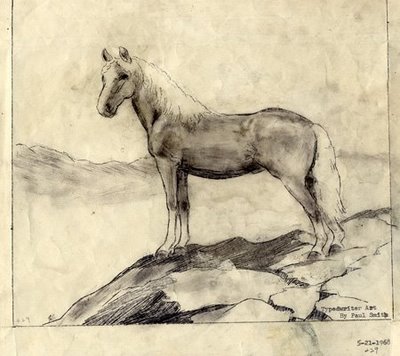
His name was Paul Smith, and he lived at Rose Haven Nursing Home ( Roseburg, OR ) for years. He was a man with extraordinary talent, born on September 21, 1921, with severe cerebral palsy. Not only had Paul beaten the odds of life with spastic cerebral palsy, a disability that impeded his speech and mobility but also taught himself to become a master artist as well as a terrific chess player even after being unable to participate in any formal education as a child.

To keep himself occupied, Paul started to experiment with a typewriter. He would use his left hand to steady his right one. And since he couldn’t press two keys simultaneously, he almost always locked the shift key down and created objects on paper using the symbols at the top of the number keys. In other words, the forms were based on these characters ….. ! @ # $ % ^ & * ( ) _ +. For the next 70 years, Paul created hundreds of pictures. He often gave the originals away. Sometimes, but not always, he kept or received a copy for his own records. As his mastery of the typewriter grew, he developed techniques to create shadings, colors, and textures that made his work resemble pencil or charcoal drawings.

This great man passed away on June 25, 2009, but left behind a collection of his amazing artwork that will be an inspiration for many. You know that saying about “When life closes a door, God opens a window?” Well, I think God just helped this man build a whole new house.

Here are some of the typewriter pictures that Paul made. They are beautiful to look at and should make us marvel at what one person can do with so little.


Posted in Uncategorized | Leave a comment

I AM NOT ASHAMED OF THE GOSPEL

search

NEW TESTAMENT CONTEXTUAL COMMENTARY

Dr. Robert R. Seyda

EPISTLE TO THE ROMANS

CHAPTER ONE (Part XXIII)

Reformer Martin Luther has this to say about God’s nonintervention when a person follows his own desires even though he sees evidence of God’s involvement in other people’s lives. He writes: “From this, we must not conclude that God wants to see sin, even if it does occur according to His will. On the contrary, as such, but He permits sin to execute His punitive judgment upon those who deserve it. The punishment, however, is not properly the sin itself, but the condemnation which is connected with it.1 This is another way of saying, that sometimes God lets stubborn people learn the hard way that His way is better than their way.

John Calvin expresses his feeling about the subject of God giving up on those who turned to idols instead of turning to Him. He writes: “With irreverence being a hidden evil, and to avoid their finding an alibi, Paul shows, by a more perceptible demonstration, that, they cannot escape, but must be held fast by a just condemnation, since such fruits have followed this irreverence as cannot be viewed otherwise than manifest evidence of the Lord’s wrath. By such evidence then he now proves the apostasy and defection of men: for the Lord indeed does so punish those, who alienate themselves from Him with their own low condition, when they ought humbly to have given Him His own glory.2 In other words, the error of substituting idols for the true and living God cannot be blamed on God. God is available at all times, but not in the way many desire Him to be. So it’s man’s choice, and he must, therefore, deal with the consequences.

H. A. Ironside makes this observation: “Men could not stand this intimate knowledge of God for it made them uncomfortable in their sins; so a host of lesser deities and divinities were invented as go-betweens, and eventually the knowledge of the true God was entirely lost. But even today creation is His constant witness. This orderly universe with its succession of the seasons and the mathematical accuracy of the movements of the heavenly bodies bears testimony to the Divine Mind. The stars in their courses proclaim the great Creator’s power.3

Forever singing as they shine, The Hand that made us is divine.4

One word in the original is rendered by four words in English: ‘Things-that-are-made’ is Poima, and from this, we get our word poem. Creation is God’s great epic poem, every part fitted together like the lines and verses of a majestic hymn.”5

Charles Hodge also speaks to the meaning of God abandoning those who insisted on worshiping false gods to reap the harvest of the seed they sowed: “This is explained as a simple permission on the part of God. But it removes no real difficulty. If God permits those who forsake Him to sink into vice, He does it intelligently and intentionally. The language of the apostle, as well as the analogy of Scripture, demands more than this. It is at least a judicial abandonment. It is a punishment for their apostasy that God gives men up to the power of sin. He withdraws from the wicked the restraints of His providence and grace and gives them over to the dominion of sin. God is presented in the Bible as the absolute moral and physical ruler of the world. He governs all things according, to the counsel of His own will and the nature of His creatures. What happens as consequences does not come by chance, but as designed; and the sequence is secured by His control.6

John Stott sees a connection between man’s stubborn mindset to live his life as he pleases as the reason for idolatry. He says: “God’s judgment on the people’s idolatry was to give them over to the sinful desires of their hearts to sexual impurity. The history of the world confirms that idolatry trends to immorality. A false image of God leads to a false understanding of sex. Paul does not tell us what kind of immorality he has in mind, except that it involved the degrading of their bodies with one another. He is right. Illicit sex degrades people’s humanness; sex in marriage, as God intended, ennobles it.”7

Also, Douglas Moo makes this comment: “Paul’s purpose in this verse is to highlight the divine side of the cycle of sin; but it must be balanced with the human side, presented in Ephesians 4:19, where Paul says that Gentiles ‘gave themselves up’ to licentiousness, leading to all kinds of ‘uncleanness.’ C. H. Dodd, in keeping with his interpretation of God’s wrath, thinks the ‘handing over’ is no more than the outworking of the natural processes of history. But so impersonal a procedure does justice neither to the biblical teaching about God’s sovereign activity in history nor to Paul’s active language.8

Jewish theologian David Stern makes some very straightforward remarks on how we should interpret what Paul says here: “When people stray from God, he eventually gives them over to the consequences of their horrific error — in physical (v. 24), emotional (v. 26) and mental (v. 28) dimensions, that is, in every aspect of their lives. Sexual sin (v. 24) and, in particular, homosexuality (vv. 26– 27) are singled out as punishments from God, punishments which themselves are sins.” With this view then, we can see how any punishment that results in a person’s immoral behavior does not come from God but from the sin they are committing, such as Sexually Transmitted Disease (STD).

Verse 25: They used the truth of God to promote a lie. They bowed down and worshiped the things God made instead of worshiping the God who made those things. He is the one who should be praised forever. Amen.

Paul continues his critique of the way the Greeks and Barbarians ran after the fantasies and mirages of man-made gods. But he points out, it wasn’t because they had no other choice, but exactly because they did made that choice. They turned from a living God to dead gods. This is something that the prophet Isaiah also confronted in his day: “They don’t realize what they are doing. They aren’t smart enough to think, ‘I burned half of the wood in the fire. I used the hot coals to bake my bread and cook the meat I ate. Then I used the wood that was left over to make this terrible thing. I am worshiping a block of wood!’ Someone like that is deceived. They don’t know what they are doing. They cannot save themselves, and they will not admit, ‘This statue I am holding is a lie!‘”9

God saw the situation in Israel getting so bad, that He called out to the prophet Jeremiah: “Do these people think they can make real gods for themselves? No, they can only make statues that are not gods at all. So, I want to let them know once and for all what real power and might looks like. Then they will know for sure that I am Lord.10 Unfortunately, by the time God began to use the prophet Habakkuk, He was forced to say: “Their false god will not help them because it is only a statue that someone formed out of metal. It is only a statue, so whoever made it cannot expect it to help. That statue cannot even speak. Look at them! They speak to a wooden statue and tell it, ‘Get up! Rescue me.’ They talk to a stone that cannot speak and say, ‘Wake up!’ Don’t you know those things cannot help you? That statue may be covered with gold and silver, but there is no life in it.”11

One early church scholar examined this practice of converting God’s truth into a lie. He writes: “They gave the name of the true God to these things, which are false gods. Ignoring what rocks and wood and other metals really are, they attributed to them something which does not belong to them. The truth of God is turned into a lie when a rock is called God. This fact drove out the God who is true, and since true and false shared a common name, it was easy for the true God to be regarded as false. This is what it means to change what is true into falsehood. For those things were not called rock or wood, but God. This is to worship the creature rather than the Creator, which is what they did. They did not deny God but worshiped a creature as God. In order to justify this, they gave these things the honor due to God, so that their worship rendered dishonor to God. For that reason, He was quick to punish them, because although they knew God, they did not honor him ‘who is blessed for ever. Amen.’ This is true!12

This redirecting one’s prayers, praise, and thanksgiving from God to some object that is labeled as a form of God have happened again in the congregation of believers. Things such as carved figures of the apostles, early church saints, and even the mother of Jesus. What would parents think if all of a sudden their son or daughter would send a close friend or someone they admired, to speak with them as their way of saying “Thank You,” or to ask for some need, or, to ask forgiveness for some mistake they made against their parent’s instructions. In most cases, the parents would say: Go tell them to come to me in person and converse with me directly.

Martin Luther shares his opinion of what is going on here with these arrogant philosophers: “They do not do Him the honor to admit that the glorious God is supremely exalted over their reason and judgment, but they elevate their own opinions so highly that they have no more difficulty or fear to judge God than they judge the leather of a poor shoemaker.13 It isn’t that Luther doesn’t like the workmanship of poor shoemakers, but that these self-important thinkers prize their concepts over anything that comes from God. But the real rub is that often the critics of these poor shoemakers are people who have never made a shoe themselves. So they are left to judging the quality of the leather rather than the workmanship. In that sense, they see God’s ethics and virtues as having far less intellectual class than their own, rather than admiring the divine intellect behind them.

John Calvin notes: “Paul repeats what he had said before, though in different words, in order to fix it deeper in our minds. When the truth of God is turned to a lie, His glory is obliterated. It is only just that they should be showered with every kind of infamy who strive to take away from God His honor, and also to reproach His name.” Calvin then adds: “No religious honor can be given to a creature without [simultaneously] taking it away, in a disgraceful and irreverent manner, from God: and vain is the excuse that images are worshiped on God’s account, since God acknowledges no such worship, nor regards it as acceptable; and the true God is not then worshiped at all, but a fictitious god, whom the flesh has devised for itself.”14

1 Martin Luther: On Romans, op. cit., loc. cit., p. 47

2 John Calvin: On Romans op. cit., loc, cit.

3 See Psalm 19

4 These words are attributed to Joseph Addison (1672-1719) who wrote the hymn: The Spacious Firmament on High

5 Harry A. Ironside: On Romans, op. cit., loc. cit.

6 Charles Hodge: On Romans, op. cit., loc. cit.

7 John Stott: On Romans, op. cit., loc. cit.

8 Douglas Moo: On Romans, op. cit., loc. cit., p. 111

9 Isaiah 44:19-20

10 Jeremiah 16:20-21

11 Habakkuk 2:18-19

12 Ambrosiaster: On Paul’s Epistles, loc. cit.

13 Matin Luther: On Romans, op. cit., loc. cit. p. 48

14 John Calvin: On Romans, loc. cit.

Posted in Uncategorized | Leave a comment

I AM NOT ASHAMED OF THE GOSPEL

search

NEW TESTAMENT CONTEXTUAL COMMENTARY

Dr. Robert R. Seyda

EPISTLE TO THE ROMANS

CHAPTER ONE (Part XXII)

No doubt Paul remembered his time in Athens where he told the city council: “We all come from God. So you must not think that He is like something people imagine or make up. He is not made of gold, silver, or stone.1 So that raises a question for us to consider: Is it wrong to talk about God seeing us, hearing us, speaking to us, lifting us up, understanding us, or His healing touch, etc.? No! Absolutely not. Just as long as we don’t insist that His eyes, ears, mouth, arms, hands, and mind are exactly like ours. All of our senses are finite, that’s why our organs were made the way they were, each with limits. But God is limitless. There’s nothing He cannot see or see through; nothing He cannot hear, nothing He cannot do, and there is nothing He does not know. Philo the Jewish philosopher said a similar thing to what Paul said, that the Jews had: “Forsaken the true God and made for themselves false gods, of perishable and created substances, calling them by the name which only belongs to the uncreated and everlasting God.2

In examining this verse, early church theologian Origen says: “We ought not to overlook this passage. The apostle is not merely complaining about those who worship idols, but he should also be understood to be refuting the Anthropomorphites,3 who are found inside the church, who say that the bodily image of man is just like the image of God, ignoring the fact that it is written in Genesis that the whole person is created in the image of God,4 which must be understood as it is interpreted by the apostle, when he said: ‘You have put off the old man with his behavior and you have put on the new man, which is created according to God.’5 … Elsewhere Paul calls this the ‘inner man’ and regards the corrupt bodily image as the ‘outer man.’6 … The mistake of those who think that it is this outer man which is the image of God is, therefore, obvious.7 In other words, if you want to look like Christ, it’s not how you resemble Him mortally on the outside, but how you resemble Him morally on the inside.

On the subject of mankind making gods to worship instead of worshiping God Himself, John Calvin has this to say: “Having made up such a God as they could comprehend according to their carnal reason, they were very far from acknowledging the true God: but devised a fictitious and a new god, or rather a phantom. And what Paul says is, that they changed the glory of God… so they departed from the true God. Nor are they to be excused for this pretense, that they believe that God dwells in heaven and that they count not the wood [idol] to be God, but his image; for it is a great indignity to God, to form so gross an idea of His Majesty as to dare to make a [supposed] image of Him. But from the wickedness of such a presumption none were exempt, neither priests, nor statesmen, nor philosophers, of whom the most sound-minded, even Plato himself, sought to discover some likeness of God.8

Bible scholar Charles Hodge gives a profound exposition on how the minds of these false god worshipers became so disoriented: “Some professed to regard the visible image as a mere symbol of the real object of their adoration; while others believed that the gods in some way filled these idols, and operated through them; and others again, that the universal principle of being was revered under these manifestations. The Scriptures take no account of these destinations. All who bowed down to stocks and stones are denounced as worshiping gods which their own hands had made, and idolatry is made to include not merely the worship of false gods, but the worship of the true God by images. The universal prevalence of idolatry among the heathens, notwithstanding the revelation which God had made of Himself in His works, is the evidence which Paul adduces to prove that they are ungodly, and consequently exposed to that wrath which is revealed against all ungodliness.”9

In other words, it’s one thing to know that the idol, image, or icon to which you pay homage represents God or is even made in the likeness of God. But when the mind becomes so blind and disillusioned that you actually believe that the true and living God inhabits this dead hand-made god, thereby making it divine and powerful, then the anchor to spiritual reality has been pulled loose and the mind then can drift anywhere and believe anything, no matter how imaginary it may be. As Douglas Moo comments: “This tragic process of human ‘god-making’ continues apace in our own day, and Paul’s words have as much relevance for people who have made money or sex or fame their gods as for those who carved idols out of wood and stone.”10 But let me go a little further on how false images of God are fashioned. In our own day, some people worship the god of their imagination, they believe they know God because of the image planted in their minds by their parents, Sunday school teachers, Pastors, books they’ve read, and even those icons seen in painted pictures or small religious statues.

Verse 24: People wanted only to do evil. So God released them and let them go their sinful way. And so they became completely immoral and used their bodies in shameful ways with each other.

It is even more clear now that Paul is referring to what he saw among the Greeks, especially in Athens, as well as Corinth just 50 miles away. Many of the ancient Greek documents have subliminal hints at many of these immoral activities, as well as outright documentation of Temple prostitution, all done in the name of their religion. This if confirmed by the Greek geographer Strabo who wrote around 20 AD: “And the temple of Aphrodite was so rich that it owned more than a thousand temple slaves, courtesans, whom both men and women had dedicated to the goddess. And therefore it was also on account of these women that the city was crowded with people and grew rich; for instance, the ship captains freely squandered their money, and hence the proverb, ‘Not for every man is the voyage to Corinth.‘”11

This distressed Paul because of the possible influence it had on believers who might be tempted to return to their old ways. For instance, he warned the Ephesians: “I have something from the Lord to tell you. I warn you: Don’t keep copying those who don’t believe. Their thoughts are worth nothing. They have no understanding, and they know nothing because they refuse to listen. So they cannot have the life that God gives. They have lost their feeling of shame and use their lives to do what is morally wrong. More and more they want to do all kinds of evil.”12

So it is no wonder that Paul wrote the Corinthians and told them: “The body is not for sexual sin. The body is for the Lord, and the Lord is for the body. And God will raise our bodies from death with the same power He used to raise the Lord Jesus. Surely you know that your bodies are parts of Christ Himself. So I must never take what is part of Christ and join it to a prostitute!13 He then advises them: “So run away from sexual sin. It involves the body in a way that no other sin does. So if you commit sexual sin, you are sinning against your own body. You should know that your body is a temple for the Holy Spirit that you received from God and that lives in you. You don’t own yourselves. God paid a very high price to make you His. So honor God with your body.”14

The Thessalonians must have had a similar problem, so Paul wrote them: “God wants each one of you to learn to control your own body. Use your body in a way that is holy and that gives honor to God. Don’t let your sexual desires control you like the people who don’t know God.”15 Paul uses this illustration to make his point: “In a mansion there are things made of gold and silver. But there are also things made of wood and pottery. Some of these are used for special purposes, others for regular jobs. The Lord wants to use you for special purposes, so make yourself clean from all evil. Then you will be holy, and the Master can use you. You will be ready for any good work.16

Early church scholars had several views on the subject of God giving up on mankind and thereby allowed them to slip further into sin. One writer notes: “In saying that God gave them up to their own lusts, Paul is not claiming that God is the direct cause of this but merely that since God did not bring vengeance on them after much longsuffering and patience, He allowed them to act according to their own desires. He did this, wanting them to be converted to repentance.17 And Bishop Theodoret makes this comment: “By saying ‘gave them up,’ Paul means that God permitted this to happen. He simply abandoned them because they had fallen into extreme ungodliness.18

Also, early church theologian Augustine addresses this subject in different writings. He says: “This means that God abandoned them to the desires of their own hearts. For Paul says that they got what they deserved from God.19 In another place, Augustine writes: “When the evil will receives power to accomplish its purpose, this comes from the judgment of God, in whom there is no unrighteousness. His punishment is carried out in this way as well as in other ways. It is not less just merely because it is hidden. The wicked man only knows that he is being punished when some clear penalty makes him feel, against his will, the evil of the sin which he committed willingly.20 And on another occasion, Augustine makes this point: “Many are left to themselves, to their own hurt.… A man that has asked for great wealth may have received it to his own hurt. While he was without it had little to fear; as soon as he has possession of it, he has become a prey to the stronger.”21

So we can see a consensus among early church scholars that while God abandoned wicked people to wallow in their own sinful dilemma, He did not forsake them altogether. Today this action by God might be labeled as “tough love.” But it also reflects God’s grace. As the apostle, Paul, says elsewhere in his commentary on Romans: “Where sin increased, grace increased all the more.22 That does not cheapen grace so it can be used as one desires to their own advantage. No! But used in the same way it was in the case of King David and Nathan the prophet, after David’s adultery with Bathsheba.23 According to Jewish law, such an act of adultery and murder was paid for by the culprit with their life. But in David’s case, God decided to allow His grace to be sufficient in covering David’s sin because He still had more for David to do that would honor Him.

1 Acts of the Apostles 17:29

2 Philo of Alexandria: On the Life of Moses, Bk. 2, Ch. 32 (171)

3 In 399 AD rumors began to circulate about ‘anthropomorphites’ dwelling in the Egyptian desert: uneducated monks who crudely believed that God had a body.

4 Genesis 1:26-27

5 Colossians 3:8-10

6 See Romans 7:22

7 Origen: On Romans, loc. cit.

8 Calvin: On Romans, 1:23

9 Charles Hodge: On Romans, loc. cit.

10 Douglas Moo: On Romans, op. cit., loc. cit., p. 110

11 Strabo, Geography, Bk. 8, Ch. 6, Sec 20

12 Ephesians 4:17-19

13 1 Corinthians 6:13-15; No doubt Paul is referencing the prostitutes in the pagan temples as part of their worship.

14 Ibid. 6:18-20

15 1 Thessalonians 4:4-5

16 2 Timothy 2:20-21

17 Pseudo Constantius: Holy Letter on Romans, loc. cit.

18 Theodoret of Cyr: On Romans, loc. cit.

19 Augustine: On Romans 5, loc. cit.

20 Ibid, The Spirit and the Letter 54

21 Ibid, Homilies on 1 John 6:8

22 Romans 5:20

23 2 Samuel 12:13

Posted in Uncategorized | Leave a comment

I AM NOT ASHAMED OF THE GOSPEL

search

NEW TESTAMENT CONTEXTUAL COMMENTARY

Dr. Robert R. Seyda

EPISTLE TO THE ROMANS

CHAPTER ONE (Part XXI)

Adam Clarke in his exposition on these verses hints that Paul was acquainted with the writings of the Greek philosophers: “This certainly refers to the foolish manner in which even the wisest of their philosophers discoursed about the Divine nature, including Socrates, Plato, and Seneca. Who can read their works without being struck with the vanity of their reasonings, as well as with the stupidity of their nonsense, when speaking about God? I might crowd my page with proofs of this, but it is not necessary to those who are acquainted with their writings, and to others, it would not be useful. In short, their foolish, darkened minds sought God nowhere but in the place in which He is never to be found; viz. the vile, corrupted, and corrupting passions of their own hearts. As they did not discover Him there, they scarcely sought Him anywhere else.”1

Charles Spurgeon preached on this subject and said: “Even in old Rome, with all its darkness, there was some knowledge of God: how can the creature quite forget its Creator? Of course, the people had not that spiritual knowledge which the Holy Ghost communicates to the renewed in heart, for the carnal mind cannot know God spiritually: its fleshly ideas cannot come near to His holy spirituality. But Paul means that they perceived the eternal power and Godhead of the Great Creator of all things; and they might have perceived much more of His divine character and glory if their foolish hearts had not been darkened by their evil passions.2

However, Albert Barnes shares that if we consult the writings of the ancient philosophers we will find plenty of evidence that they were aware of a superior divine being.3 In one of the references he names we find the following quote from Chrysippus:4If there be some thing in the world that man’s mind and human reason, strength, and power are incapable of producing, that which produces it must necessarily be superior to man.”5 Barnes also makes reference to a quote from Cicero in the same work, that reads: “When we gaze upward to the sky and contemplate the heavenly bodies, what can be so obvious and so manifest as that there must exist, some power possessing transcendent intelligence by whom these things are ruled.”6 To this Barnes asks the question: Who else could this be but God?

John Stott gives us this explanation: “The opening statement that they knew God cannot be taken absolutely since elsewhere Paul writes that people outside Christ do not know God. It refers rather to the limited knowledge of God’s power and glory which is available to everybody through general revelation. Instead of their knowledge of God leading to the worship of God, they neither glorified Him as God nor gave thanks to Him. Rather their thinking became futile and their foolish hearts were darkened.7

Douglas Moo echoes the same thought: “This limited knowledge of God falls far short of what is necessary to establish a relationship with Him. Knowledge must lead to reverence and gratitude. This it has failed to do. Instead of acknowledging God ‘as God,’ by glorifying Him and thanking Him, human beings perverted their knowledge and sank into idolatry and immorality.”8 It is clear that the individuals Paul refers to knew of God, but they did not really know God. This same fallacy is with us today. It can be seen in the irony of those who use God’s name in vain even though they claim He doesn’t exist.

Verses 22-23: They thought they were being wise, but they became fools. Instead of honoring the immortal greatness of God, they traded it for the worship of idols—things made to look like humans, or like birds, animals, and snakes who get sick and die.

The thing that made Paul shake his head in bewilderment was the fact that such people were convinced they knew exactly what they were doing. When in fact, it was just the opposite of what they thought. We might compare this to what happened to many in the early gold rush in California that started in 1848. Many of the miners would hide the location of their diggings or pannings while bringing bags filled with gold to assessors, only to find out it was worthless pyrite. Thus it became known as “Fool’s gold.” As Charles Hodge point out, they were: “Saying in the sense of pretending it to be. The more they boasted of their wisdom, the more conspicuous became their folly. What greater folly can there be, than to worship beasts rather than [the] God [who created them]?9

In the case Paul presents here, many of those who were worshiping idols thought they were forms of real gods when in fact they were only imagined images carved out of wood, stone, silver, or gold. It was something the prophet Jeremiah had to deal with: “People are so stupid! Goldsmiths end up looking like fools by the idols they make. These statues are nothing but lies. These ridiculous idols are worth nothing. They are something to make fun of.”10 What astounded Paul, as it did Jeremiah, was that these inanimate man-made objects were given features such as eyes, ears, noses, mouths, arms, hands, legs, and feet, but there was no life in them. Therefore, they couldn’t see, hear, smell, talk, walk, or pick up anything.11

Martin Luther takes what Paul says here as the Golden Rule for all mankind, both those who are considered special in society and those who are thought of as average.12 In other words, no matter how intelligent or how uneducated a person maybe, to suggest that they have greater wisdom than God makes them all equal fools. This is borne out by the fact they such foolishness leads both to commit the same corruption of worshiping gods of their own making rather than the God who made them.

Reformist John Calvin spoke on what secular philosophers were thinking as they looked at God’s creation: “There were indeed none who sought not to form some ideas of the majesty of God, and to make Him such a God as they could conceive Him to be according to their own reason. This presumption I hold is not learned in the schools, but is innate, and comes with us, so to speak, from the womb. It is indeed evident, that it is an evil which has prevailed in all ages — that men have allowed themselves every liberty in coining superstitions. The arrogance, then, which is condemned here is this — that men sought to be in themselves wise, and to pull God down to a level with their own low condition when they should have humbly given Him His own glory. For Paul holds this principle, that none, except through their own fault, are unacquainted with the worship due to God; as though he said, “As they have proudly exalted themselves, they have become infatuated through the righteous judgment of God.” There is an obvious reason, which contravenes the interpretation which I reject; for the error of forming an image of God did not originate with the philosophers; but they, by their consent, approved of it as received from others.”13

Adam Clarke makes this point: “A dispassionate examination of the doctrine and lives of the most famed philosophers of antiquity, of every nation, will show that they were darkened in their mind and irregular in their conduct. It was from the Christian religion alone that true philosophy and genuine philosophers sprang.”14 Clarke goes on to say: “The finest representation of their deities was [found] in the human figure; and on such representative figures the sculptors spent all their skill; hence the Hercules of Farnese, the Venus of Medicis, and the Apollo of Belvidere. And when they had formed their gods according to the human shape, they endowed them with human passions; and as they clothed them with attributes of extraordinary strength, beauty, wisdom, etc., not having the true principles of morality, they represented them as slaves to the most disorderly and disgraceful passions; excelling in irregularities the most libertine of men, as possessing unlimited powers of sensual gratification.”15

Several early church scholars have a number of comments on this verse. Says Ambrosiaster: They imagined that they were wise because they thought they had explored the natural sciences, investigating the courses of the stars and the quantities of the elements, while rejecting the God who made them. Therefore they are fools, for if these things are worthy of praise, how much more is their Creator!16 The great preacher Chrysostom said: “Having some high opinion of themselves and not being patient enough to go the way that God had commanded them, they were immersed in a way of thinking which made no sense.”17 Then the great scholar Augustine makes this point: “It is pride that turns man away from wisdom, and folly is the consequence of turning away from wisdom.18 And one of Augustine’s contemporary scholars says: “They thought they were wise because they had ‘discovered’ how the invisible God can be honored by means of a visible idol!19 And bishop Theodoret concludes: “They increased their guilt by their claim, for in calling themselves wise they showed that in fact, they were fools.”20

When the Psalmist wrote about how the children of Israel were fooled into making an idol out of gold, he said: “They traded their glorious God for a statue of a grass-eating ox!21 And what made it so ridiculous was that the ox couldn’t move or eat grass. But we must ask ourselves this question: Since we cannot see God, what do we think He looks like in our imagination? The prophet Isaiah asked this question and then gives his answer: “Can you compare God to anything? Can you make a picture of God? No, but some people make statues from rock or wood, and they call them gods.”22 Here in our text, Paul emphasizes the fact that God is a timeless, immortal, bodyless Spirit. After all, that’s exactly the way Jesus His Son described Him: “God is a spirit. So the people who worship Him must worship in spirit and truth.”23

1 Adam Clarke: On Romans, loc. cit.

2 Charles Spurgeon: On Romans, loc. cit.

3 Albert Barnes: On Romans, op. cit., loc. cit.

4 Chrysippus of Soli (c. 279 – 206 BC), Greek Stoic philosopher.

5 Cicero, De Natura Deorum Academica, Harvard University Press, London 1933, Vol. 19, Bk. II, Ch. 6, p. 139

6 Ibid. Ch. 2, p. 125

7 John Stott: On Romans, op. cit., loc. cit.

8 Douglas Moo: On Romans, op. cit., loc. cit., p. 107

9 Ibid.

10 Jeremiah 10:14-15

11 Cf. Psalm 115:4-8; 135:15-18

12 Martin Luther: On Romans, op. cit., loc. cit., p. 44

13 John Calvin: On Romans, loc. cit.

14 Adam Clarke: On Romans, loc. cit.

15 Ibid., verse 23

16 Ambrosiaster: On Paul’s Epistles, loc. cit.

17 Chrysostom: Homilies on Romans 3, loc. cit.

18 Augustine: On Free Will 24.72

19 Pelagius: On Romans, loc. cit.

20 Theodoret of Cyr: On Letter to the Romans, loc. cit.

21 Psalm 106:20; Cf. Jeremiah 2:11

22 Isaiah 40:18-19

23 John 4:24

Posted in Uncategorized | Leave a comment

I AM NOT ASHAMED OF THE GOSPEL

search

NEW TESTAMENT CONTEXTUAL COMMENTARY

Dr. Robert R. Seyda

EPISTLE TO THE ROMANS

CHAPTER ONE (Part XX)

Bible scholar Douglas Moo adds this comment: “It is vital if we are to understand Paul’s gospel and his urgency in preaching it to realize that natural revelation leads not to salvation but to the demonstration that God’s condemnation is just: people are ‘without excuse.’ That verdict stands over the people we meet every day just as much as over the people Paul rubbed shoulders with in the first century, and our urgency in communicating the gospel should be as great as Paul’s.1

And Jewish scholar David Stern shares his view of what Paul has said here: “If you do not know God, it is not God’s fault but yours. The characteristics of God that make His existence self-evident, His eternal power, and His divine nature, are known to you because God has made it plain to you. ‘The heavens declare the glory of God, and the firmament proclaims His handiwork. Each day utters speech, and each night expresses knowledge.’2 Therefore, ‘Only the fool has said in his heart, There is no God’3 — not meaning ‘No God exists,’ but ‘No God exists who actively concerns Himself with people’s thoughts and deeds and judges them.’ This is as close as the Bible comes to ‘proving the existence of God,’ for there is no reason why it should prove it. Rather, it takes effort for sinners to ignore God; defense mechanisms require active energy for their maintenance by people who in their wickedness keep suppressing the truth. Or, as the prophet put it centuries earlier, ‘Your iniquities have made a separation between you and your God.’4 In sum, since you already know enough to trust God and obey Him, you have no excuse for not doing so.”5

Verse 21: When they discovered there was a God, they refused to honor Him as God or even acknowledge His existence. Instead, they preferred the silly figments of their imagination. As a result, their foolish hearts were filled with even more ignorance.

After starting with the evidence of a Creator right before their eyes, Paul moves on to point out that many of the heathen nations had done the exact thing God warned His own children not to do: “Be careful when you look up to the sky and see the sun, the moon, and the stars—all the many things in the sky. Be careful that you are not tempted to worship and serve them.”6 Even the earliest patriarchs knew this was wrong. Said Job: “I was never foolish enough to worship the sun and the moon. This is also a sin that must be punished. If I had worshiped them, I would have been unfaithful to God All-Powerful.7 And Paul’s point is, these things are there to direct those people who worship creation to start worshiping the Creator.

Paul shows that he was not convinced by those philosophers on Mars Hill in Athens knew the real and living God even though they had an altar to Him.8 The apostle John put it this way: “They will be judged by this fact: The Light came into the world. But they did not want Light. They wanted darkness to hide the evil things the were doing.”9 These people could not see what David saw: “My LORD, there is no God like you. No one can do the things that you have done.”10 But one day, all the world will hear these words: “Fear God and give Him praise. The time has come for God to judge all people. Worship God. He made the heavens, the earth, the sea, and the springs of water.”11

Making handmade objects to represent deities was not new. As a Jew, Paul knew it was an epidemic among his own ancestors. In the Old Testament, we read: “The people would not listen. They were very stubborn like their ancestors. Their ancestors did not trust in the Lord their God. They refused to follow His laws and the agreement He made with their ancestors. They would not listen to His warnings. They worshiped idols that were worth nothing and so they themselves became worth nothing.”12

By the time God called Isaiah to go preach to His people, things had only gotten worse: “All the work of idol-makers amounts to nothing; their precious productions profit no one. And it is a shame that the people who worship these idols don’t even see this or understand.”13 In fact, the LORD spoke to the prophet Jeremiah and pointed out a tradition that is still with us today, even among Christians: “They cut down a tree in the forest…They decorate it with gold and silver and then fasten it securely with hammer and nails so it won’t fall over.”14 This is done as part of the celebration of Jesus’ birth. In some cases, the tree gets more attention than the One whose birth is supposedly being honored. There is nothing wrong with having a decorated tree in your living room at Christmas time, as long as you know you are using a heathen symbol to give honor to the new born King.

There is an interesting section in St. Augustine’s writings that deals with how the Jews were viewed by the Romans. He is quoting the Stoic philosopher Seneca who lived during the time of Christ and Paul. Augustine writes:

Seneca, among the other superstitions of civil theology, also found fault with the sacred things of the Jews, and especially the Sabbaths, affirming that they act uselessly in keeping those seventh days, whereby they lose through idleness about the seventh part of their life, and also many things which demand immediate attention are damaged…When he was speaking concerning those Jews, he [Seneca] said, “When, meanwhile, the customs of that most accursed nation have gained such strength that they have been now received in all lands, the conquered have given laws to the conquerors.” By these words he expresses his astonishment; and, not knowing what the providence of God was leading him to say, subjoins in plain words an opinion by which he showed what he thought about the meaning of those sacred institutions: “For,” he says, “those, however, know the cause of their rites, whilst the greater part of the people know not why they perform theirs.” But concerning the solemnities of the Jews, either why or how far they were instituted by divine authority, and afterwards, in due time, by the same authority taken away from the people of God, to whom the mystery of eternal life was revealed, we have both spoken elsewhere, especially when we were treating against the Manichaeans, and also intend to speak in this work in a more suitable place.15

No wonder the apostle Paul was so perturbed by what was happening around him, not only among the Greek and Barbarians but also among his fellow Jews. He was in no mood to simply dismiss their refusal to honor God as some small misdemeanor. To him, it mattered greatly because they were trying to replace the unseen God with objects of their own making. Not only that but attempting to infuse divine powers into these idols made of earthly materials. So he continues with his condemnation of such foolishness.

Several early church scholars had comments on this subject. One of them said: Imagining that they could grasp God with their minds, they fell away from their natural instinct and worshiped creatures instead of the Creator.16 And one bishop, known as a good pastor, had this point to make: “In the hearts of the Gentiles, the purest honoring of the one God was changed into the bloody worship of different gods.”17 Then, a lay member of the early church who was also a theologian adds this: “It is well known how Greek schools and Roman eloquence and the search of the whole world in the quest of the supreme good, with the most penetrating study and outstanding ability, accomplished nothing by their labor except to become “futile in their thinking, and their senseless minds were darkened.”18

The church Patriarch of Constantinople offers this insight from his day: “The pagans knew that there was a God, and it is clear that they did not receive judgment because of this. For it was not for want of knowledge that they were condemned, but the opposite. For each one glorified God in whatever sense they thought the god was that they served. Thus they corrupted the whole matter by their peculiar and mistaken ideas. They abandoned God’s way of knowing Him and preferred their own, falling into the deepest imbecility, outdoing themselves in their so-called wisdom by adding to their foolishness, descending to the worship of reptiles and inanimate objects.”19

Reformer Martin Luther has an interesting illustration to explain what Paul says the heathens did with what they could observe as evidence of a supreme God in the universe. He said it was a lot like a fool looking for some income by trying to find a job, but only to get credit for looking. Then, once an employer is found, shows no interest in accepting the job and earning the money. Luther put it this way: “Likewise the heathens, though they knew about God, were satisfied with and gloried in the mere knowledge about Him. But they put out of mind His worship, in particular, the inward dedication to God, whom they acknowledged.20

John Calvin comments on the fact that although mankind was seeing evidence of God, they refused to believe what they were seeing. He writes: “No idea can be formed of God without including His eternity, power, wisdom, goodness, truth, righteousness, and mercy. His eternity appears evident, because He is the maker of all things — His power, because He holds all things in His hand and continues their existence — His wisdom, because He has arranged things in such an exquisite order — His goodness, for there is no other cause than Himself, why He created all things, and no other reason, why He should be inspired to preserve them — His justice, because in His government He punishes the guilty and defends the innocent — His mercy, because He bears with so much patience the perversity of men — and His truth, because He is unchangeable. He then who has a right notion of God ought to give Him the praise due to His eternity, wisdom, goodness, and justice.”21

And Charles Hodge adds this thought: “We find throughout the Scriptures the idea of foolishness and sin, and wisdom and piety, intimately connected. In the language of the Bible, a fool is an impious man; the wise are the pious, [to] those who fear God; foolishness is sin; understanding is religion. The folly and darkness of which the apostle here speaks are therefore expressive of lack of divine knowledge, which is both the effect and cause of moral depravity.”22

1 Douglas Moo: On Romans, op. cit., loc. cit., p. 106

2 Psalm 19:1-2, (19:2–3, Jewish Bible)

3 Psalm 14:1; 53:1 (53:2, Jewish Bible)

4 Isaiah 59:2

5 David H. Stern: On Romans, op. cit., loc. cit.

6 Deuteronomy 4:19

7 Job 31:27-28

8 Acts of the Apostles 17:23

9 Ibid. 3:19

10 Psalm 86:8

11 Revelation 14:7

12 2 Kings 17:14-15; Cf. Jeremiah 2:5

13 Isaiah 44:9

14 Jeremiah 10:3-4

15 St. Augustine: City of God, Ch. 11, Skyros Publishing, p. 178

16 Pelagius: Commentary on Romans, loc. cit.

17 Caesaius of Arles: Sermon 100a.2

18 Prosper of Aquitain: Grace and Free Will 12.4

19 Gennadius of Constantinople: Pauline Commentary, op. cit., loc. cit.

20 Martin Luther: On Romans, op. cit., loc. cit., p. 44

21 John Calvin: On Romans, loc. cit.

22 Charles Hodge: On Romans, loc. cit.

Posted in Uncategorized | Leave a comment

I AM NOT ASHAMED OF THE GOSPEL

search

NEW TESTAMENT CONTEXTUAL COMMENTARY

Dr. Robert R. Seyda

EPISTLE TO THE ROMANS

CHAPTER ONE (Part XIX)

Verse 20: Since the creation of the universe His invisible qualities – both His eternal power and His divine nature – have been clearly evident, because they can be understood from what He has created. Therefore, they have no excuse.

Paul now argues against those who might claim innocence by virtue of ignorance. In other words, I can’t see God so why should I believe He exists. It is equal to a person looking at a beautiful portrait and saying: I can’t believe a living being painted this, or watch a complex machine operate and say I don’t believe someone put this together, it formed all by itself.

Tertullian, one of the early church’s theologians, reveals his thinking our senses: “The objects which are touched by the mind are of a higher nature since they are more spiritual than those which are grasped by the senses. Since these are corporeal, any superiority they may display lies only in the ‘objects – e.g., as lofty ones contrasted with humble – [those], not in the ‘faculties’ of the intellect over against those in the] senses. For how can the intellect be considered sovereign above the senses, when it is these which educate it for the discovery of various truths? It is a fact that these truths are learned by means of palpable forms; in other words, invisible things are discovered by the help of visible ones, even as the apostle says [here] in his epistle.”1

David was impressed to the point of wondering why God would be interested in any person who was not interested in Him.2 Yet, Jesus said that because of God’s love and mercy: “He lets the sun rise for all people, whether they are good or bad. He sends rain to those who do right and to those who do wrong.3 By doing this, God shows Himself to be a caring, benevolent deity. Yet, says Paul, those who refused to believe chose not to give God the honor, praise, and the acknowledgment He deserves.

Paul exclaimed to young Timothy: “Honor and glory to the King who rules forever. He cannot be destroyed and cannot be seen. Honor and glory forever and ever to the only God. Amen.”4 The writer of Hebrews said, this faith in the unseen, because of what was seen, affected Moses to the point where: “Moses left Egypt because he had faith. He was not afraid of Pharaoh’s anger. He continued strong as if he could see the God no one can see.”5 So why don’t these doubters see the truth in Isaiah’s challenge: “Look up to the skies. Who created all those stars? Who created all those “armies” in the sky? Who knows every star by name? He is very strong and powerful, so not one of these stars has ever gone missing.”6

One early church theologian makes this point: “The human mind, learning to know the hidden things from those which are manifest, may consider in spirit the greatness of the Maker from the greatness of His works, which it sees with the eyes of the mind.7 Then, another early church scholar sees how God’s creation serves as a training tool for the soul: “You will find that the world was not devised at random or for no purpose, but to contribute to some useful end and to the great advantage of all beings. It is truly a training place for rational souls and a school for attaining the knowledge of God. Through visible and perceptible objects it provides guidance to the mind for the contemplation of the invisible.”8 And then an early Bishop of the church has this to say: “We can find it easy to understand, then, that the Creator of angels, dominions and powers is He who in a moment of His power made this great beauty of the world out of nothing, which did not itself have existence and gave substance to things or causes which did not themselves exist.9

When Paul was in Athens speaking to the Areopagus council, he made this point to those who lived there that he saw numerous statutes and temples all around the city to many gods. Then, he goes on to describe the God he served: “He is the God who made the whole world and everything in it. He is the Lord of the land and the sky… He is the one who gives people life, breath, and everything else they need. He does not need any help from them. He has everything he needs… God wanted people to look for Him, and perhaps in searching all around for Him, they would find Him. But He is not far from any of us… It is through Him that we are able to live, to do what we do, and to be who we are. As your own poets have said, ‘We all come from Him.’ That’s right. We all come from God. So you must not think that He is like something people imagine or make.10

Because of this, Paul left no room for anyone to have an excuse. Like some people today, they are willing to look at the universe with its complexity, order, and continuous energy and say that it all came into existence by accident, but when you try to convince them that this could also be true of an airplane or automobile, clock or computer, they just laugh at you. But Jesus made it clear: “If I had not come and spoken to the people of the world, they would not be guilty of sin. But now I have spoken to them. So they have no excuse for their sin.11

Reformer Martin Luther points to those the apostle Paul is addressing: “He judges the Romans and their wise men much more severely because they led the world through their political system, dominion, and philosophy. With that in mind, the text teaches us that ministers of the Gospel must admonish, first and above all, the rulers and thinkers of the people, not indeed in their own words coming from an erratic confused mind, but by means of the Gospel showing them how they act contrary to the divine Word and so sin.12 In other words, it is not up to the believer to prove there is a God, it is up to the atheist to prove there is no God. It’s hard for them to ignore the vast array of evidence, so they seek ways of guessing or surmising how it all came into being without a God.

John Calvin speaks of God’s invisible things: “God is in Himself invisible; but as His majesty shines forth in His works and in His creatures everywhere, men ought in these to acknowledge Him, for they clearly set forth their Maker: and for this reason the Apostle in his Epistle to the Hebrews says, that this world is a mirror or the representation of invisible things.13 He does not mention all the particulars which may be thought to belong to God; but he states, that we can arrive at the knowledge of his eternal power and divinity; for he who is the framer of all things, must necessarily be without beginning and from himself. When we arrive at this point, the divinity becomes known to us, which cannot exist except accompanied with all the attributes of a God, since they are all included under that idea.”14

Bible teacher H. A. Ironside sees a simple formula here. He writes: “As many as have sinned without law shall also perish without law, and as many as have sinned in the law shall be judged by the law. No principle could be sounder. Men are held responsible for what they know or might know if they would. They are not condemned for ignorance unless that ignorance is the result of the willful rejection of light. ‘Men love darkness rather than light because their deeds are evil.1516 In other words, the evidence is there if people will just look at it, but some are so comfortable in their ignorance they don’t want to learn anything new.

Charles Hodge adds: “Though the revelation of God in His works is sufficient to render men inexcusable, it does not follow that it is sufficient to lead men, blinded by sin, to a saving knowledge of Himself. As Paul says of the law, that it was weak through the flesh, that is, insufficient on account of our corruption, so it may be said of the light of nature, that, although sufficient in itself as a revelation, it is not sufficient, considering the indisposition and inattention of men to [understand] divine things.”17

Charles Spurgeon adds to this by saying: “Men who never heard the gospel can see God in His works if they open their eyes. There is written upon the face of nature enough to condemn men if they do not turn to God. There is a gospel of the sea, and of the heavens, of the stars, and of the sun; and if men will not read it, they are guilty, for they are willfully ignorant of what they might know, and ought to know.18

Albert Barnes uses Paul’s indictment of the philosophers in his day to admonish the people of his own day:19How true and fearful is this, respecting that great multitude in Christian lands who have the Bible, and who never read it; who are within the reach of the sanctuary, and never enter it; who are admonished by friends, and by the Providences of God, and who regard it not; and who look upon the heavens, and even yet see no proof of the eternal power and Godhead of Him who made them all! Nay, there are those who are apprised of the discoveries of modern astronomy, and who yet do not seem to reflect that all these glories are proof of the existence of an eternal God; and who live in ignorance of religion as really as the pagan, and in crimes as decided and malignant as disgraced the darkest ages of the world. For such there is no excuse, or shadow of excuse, to be offered in the day of doom. And there is no fact more melancholy in our history, and no one thing that more proves the stupidity of people, than this sad forgetfulness of Him that made the heavens, even amid all the wonders and glories that have come fresh from the hand of God, and that everywhere speak His praise.”20

John Stott gives us this thought to consider: “There are degrees of the knowledge of God, and these phrases cannot possibly refer to the full knowledge of Him enjoyed by those who have been reconciled to Him through Christ. For what Paul says here is that through general revelation people can know God’s power, deity, and glory (not His saving grace through Christ) and that this knowledge is not enough to save them but rather to condemn them, because they do not live up to it. Instead, they suppress the truth by their wickedness, so that they are without excuse. It is against this willful human rebellion that God’s wrath is revealed.”21

1 Tertullian: A Treatise on the Soul 18, loc. cit.

2 Psalm 8:3-4

3 Matthew 5:45

4 1 Timothy 1:17; Cf. 6:16

5 Hebrews 11:27

6 Isaiah 40:26

7 Novatian: The Trinity 3.6

8 Basil: Homily One, Creation of the Heavens and Earth 1.6

9 Ambrose: Six Days of Creation 1.4.16

10 Acts of the Apostles 17:24-25, 27-29

11 John 15:22

12 Martin Luther: On Romans, op. cit., loc. cit., p. 44

13 Hebrews 11:27

14 John Calvin: On Romans, Verse 20

15 John 3:19

16 Harry A. Ironside: On Romans, op. cit., loc. cit.

17 Charles Hodge: On Romans, op. cit., loc. cit.

18 Charles Spurgeon: On Romans, op. cit., loc. cit.

19 Albert Barnes held a prominent place in the New School branch of the Presbyterians during the Old School-New School Controversy, to which he adhered on the division of the denomination in 1837; he had been tried (but not convicted) for heresy in 1836, mostly due to the views he expressed in Notes on Romans (1834) of the imputation of the sin of Adam, original sin, and the atonement; the bitterness stirred up by this trial contributed towards widening the breach between the conservative and the progressive elements in the church.

20 Albert Barnes: On Romans, op. cit., loc. cit.

21 John Stott: On Romans, op. cit., loc. cit.

Posted in Uncategorized | Leave a comment

POINTS TO PONDER

silhouette-man-top-mountain-sunset-conceptual-sce-scene-48015806

I remember reading a quote that said: Reputations are created every day and every minute.” It is attributed to a gentleman named Christopher Ruel. By making this statement, Mr. Ruel created his own reputation as a man who knows what he’s talking about.

Reputation is described as the beliefs or opinions that are generally held about someone or something. But it is also understood that while reputations are created, they must continue to perform as advertised in order to gain value. The more you repeat something, the more people will begin to expect that of you. If it’s good, then the value of your reputation grows. If it’s unacceptable, then the value of your reputation plunges until it’s not worth a penny.

We are told that reputation plays a central role in human societies. Empirical and theoretical work indicates that a good reputation is valuable in that it increases one’s expected payoff in the future. That’s because reputation is a rough measurement of how much the community trusts you; it is earned by convincing your peers that you know what you’re talking about. So, the more your reputation grows in value, the more privileges you gain.

Here are some thoughts from an article I read in Psychology Today. The value of a good reputation begins by knowing that by not always accepting our own answer to everything it increases the value of our reputation. The benefits of a good reputation will earn us trust, faith, belief, confidence, and assurance. People will begin to believe in us as a person of our word. Acknowledging mistakes and a willingness to learn will also increase people’s tendency to put stock in our character.

Remember this, we may have influence over our reputation, but we will never have full control of it. We should consider it a more valuable asset than our job, house, car, or money. We may have what we feel is a healthy self-esteem and, therefore, we have no interest in what others think of us. Keep this in mind: A good reputation can be used as an instrument for not only maintaining our self-esteem but to help us navigate through daily life, a good thing for smoothing out our journey over bumpy roads. But a bad reputation may cause doors to be slammed in our face and thereby destroying any confidence we have in ourselves.1 Think of it this way: you may start your reputation but others will build it. What really counts is what you give them as material to construct your reputation in their eyes. – Dr. Robert R Seyda

1 Psychology Today: The Value of a Good Reputation by Dr. Alex Lickerman

Posted in Uncategorized | Leave a comment